
Scientific Management
The word scientific management is made from two words. The first is scientific, the other is management. Scientific means specialized knowledge on a particular subject, whereas management means establishing coordination between the various factors of production so that maximum production can be done at minimum cost. It is the name of that management system that is based on organized and rational patterns. Therefore, the resources for production are utilized in the best possible way at a minimum cost.
Taylor believed that the main reason for problems in factories is ‘lack of knowledge‘ on one hand, the managers are not aware of the actual productivity of their workers and on the other hand, the workers do not know how to achieve maximum and qualitative production. Due to the lack of knowledge on both sides and the traditional resources and methods adopted etc. only, productivity is adversely affected.
Taylor introduced new and specialized methods and principles in place of these traditional methods of management, by which maximum production at minimum cost could become possible.
Frederick Winslow Taylor
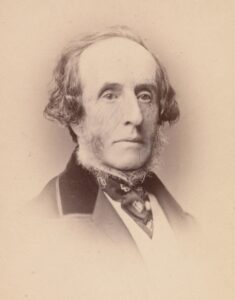
He wrote a book based on his experiences on management which is named ‘Scientific Management’.
He died in 1915 at the age of 59.
Taylor Piece Rate System
F.W. Taylor in 1884, first applied it to the Medieval Steel Company, in which he was an employee. Under this system, the work of each worker and the duration of time of its completion are fixed in advance. The workers who complete more than the predetermined amount of work in the given time are provided with higher wages; while the workers who complete less than the given work in the given time are provided lower wages. Thus, the efficient workers get more wages and the less efficient get lesser wages under this system.