
Meaning of Departmentalization (Departmentation)
Departmentalization refers to the division of a business organization, into small units or departments. For example – the division of an organization into production department, marketing department, finance department, etc. Departmentalization is done based on the nature of the business and at the time of departmentalization, each department is specified clearly about its activities and area of work. The main aim of departmentalization is to take the benefits of specialization.
Definition
According to Kurtz
Departmentalization is a process of division of business concerns into small units or departments, from which benefits of specialization can be achieved.
Mehtohd and Basis of Departmentation
Following are the various methods, types, or bases of compartmentalization:
-
Departmentalization by Time
When the functions of a business organization are divided based on time, like – day, night, week, etc., then it is called Departmentalization by Time. For example – Day and night shifts in an office or an organization. Mostly in offices or organizations where work is done 24 hours, it is divided into 3 shifts of 8 hours each. For departmentalization by time, it is necessary that in each shift all facilities are equal and should not be biased, which in practice is done rarely. That is why; mostly the conflicts between the workers and employees are regarding the shifts only.
-
Departmentalization by Products
Under this, departments in an organization are established based on the various products; produced by it. In this way, according to the brands of different commodities, different departments are established. In each department, a person is made Head of the Department and granted necessary authority and responsibilities. For each activity of the department, the head of the department is responsible. For example – In our country, the car-producing company, Maruti Udyog has different departments for its different models like – Maruti Zen, Maruti 1000, Maruti 800, Maruti Alto, etc. This is called Departmentalization by Products.
-
Departmentalization by Customers
When a business organization or office is divided into departments based on various types of customers, then it is called Departmentalization by Customers. For example – A cycle producing company divides itself into departments relating to cycles for children, ladies cycles, gents cycles, etc., according to the kind of customers. In this way, the main advantage of departmentalization is that each department gives full attention to the needs of its customers.
-
Departmentalization by Location or Territory
Under location or territory-wise departmentalization, the organization is divided geographically into branches or departments. Each branch has its own production, marketing, and finance departments. Mostly this form of departmentalization is adopted by big organizations. Such Business Organisations distribute their activities to different branches and the responsibility for all the activities of the branches rests with its Manager or Head of the Department. For example – Life Insurance Corporation, Gandhi Khadi Ashram, Bata Shoe Company, etc., have a business spread over the whole of the country, is divided into Regional Branches and the branch of each region is responsible for all the activities delegated to it. The main advantage of this kind of departmentalization is that by keeping in view the local conditions of the area, the organization can work more effectively. Whereas, the main disadvantage is that this kind of departmentalization can only be adopted by big organizations.
-
Departmentalization by Functions
 When an organization is divided according to its functions, it is termed a departmentation by functions. For example – according to the activities performed by an organization like, sales, purchase, production, finance, marketing, etc., the sales department, purchase department, production department, finance department, marketing department, employees department, etc. are formed with the expansion of the organization; new departments can be added to it.
 -
Departmentation by Processes
The production of some products is possible only when they are passed through some different processes. For example – Cloth production in textile industries involves weaving, dying, washing, printing, and packing processes. When for the production of a single commodity, the organization is divided into separate departments for each process; it is called Departmentation by Processes.
There is a difference between departmentation by functions and departmentation by processes. In departmentation by functions, the organization is divided according to its functions into departments, whereas departmentation by processes relates to the different processes concerning a single function and the division of departments on the basis of these processes. -
Departmentation by Numbers
In this method of departmentation, the workers are divided into groups of definite numbers, like a group each of 10-10 or 20-20 workers. This kind of departmentation is adopted by those organizations whose achievement of goals depends mainly on its manpower. This method has been followed by the army and police activities since ancient times. But in present times, this method is in use in very few areas because today. big organizations and offices mostly use machines for their work.
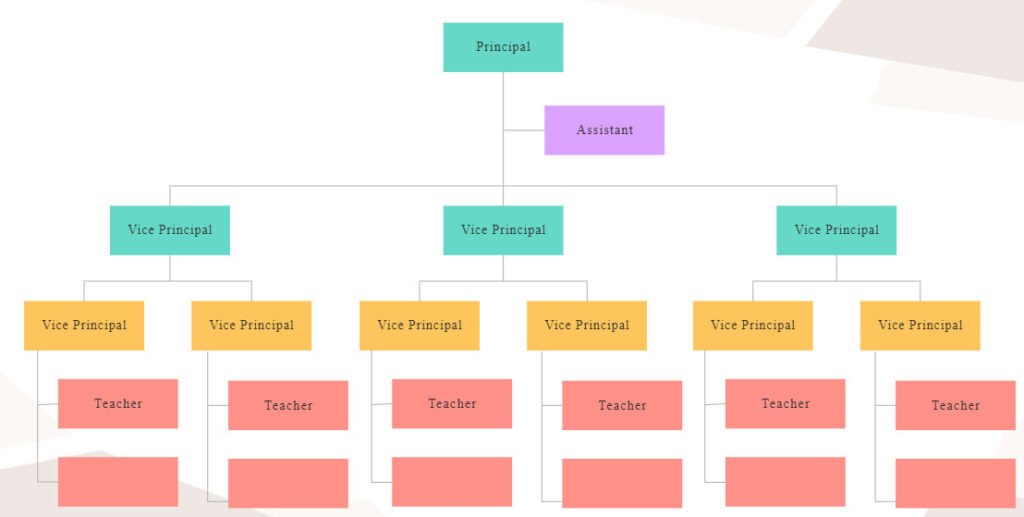 When an organization is divided according to its functions, it is termed a departmentation by functions. For example – according to the activities performed by an organization like, sales, purchase, production, finance, marketing, etc., the sales department, purchase department, production department, finance department, marketing department, employees department, etc. are formed with the expansion of the organization; new departments can be added to it.